Gladiators of the WWK Arena: FC Augsburg’s Roman-Inspired Tunnel

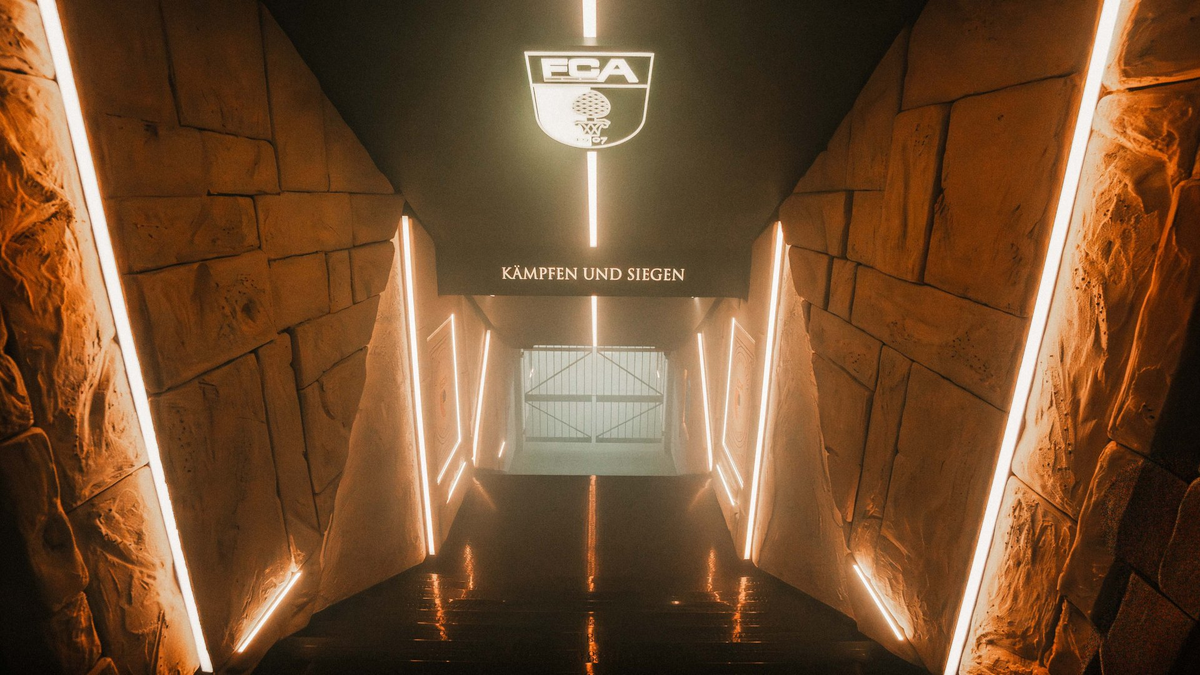
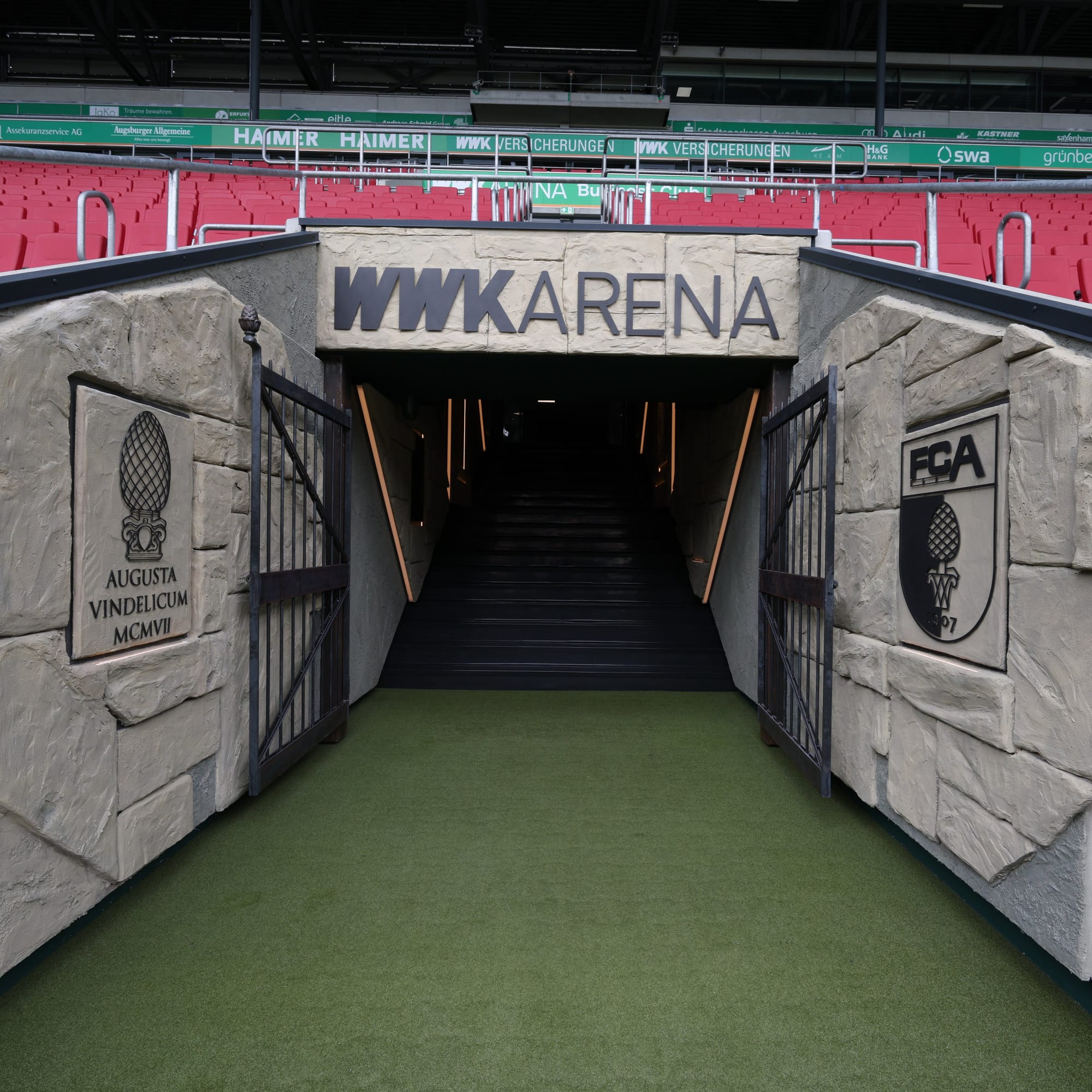
When FC Augsburg’s players step onto the pitch at the WWK Arena, they now do so through an entrance that feels more gladiatorial than ever. The club has unveiled a spectacular redesign of the players’ tunnel—one that ties modern football to the deep Roman roots of the city of Augsburg.
A Tunnel Steeped in History
Unveiled ahead of a home fixture against Bayern Munich, the tunnel is more than a functional passage—it’s a story in stone, light, and symbolism. Inspired by Roman amphitheatres in Rome and Verona, the design immerses players and fans alike in Augsburg’s ancient heritage.
Key Features
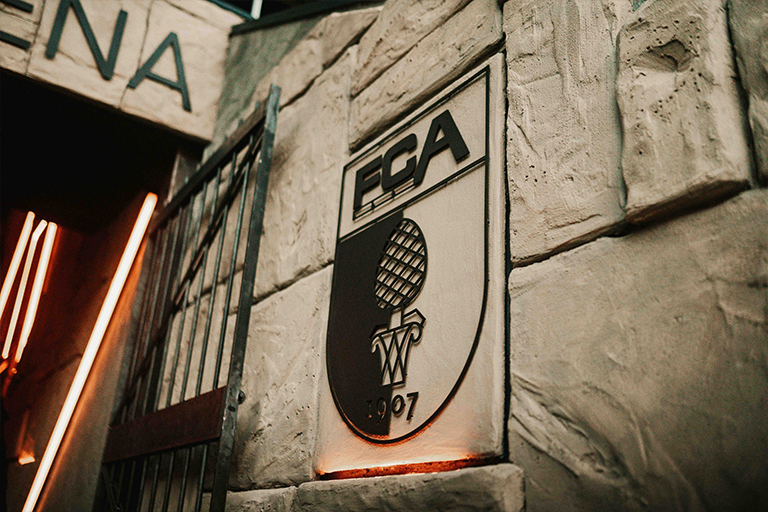
- Iron Gates: Styled after Roman amphitheatres, they also carry elements of the club badge—including the Zirbelnuss, carefully reproduced from an original Roman artifact found near the city’s wall.
- Stone Tunnel Walls: Laid in ancient Roman patterns, with accent lighting that highlights their texture.
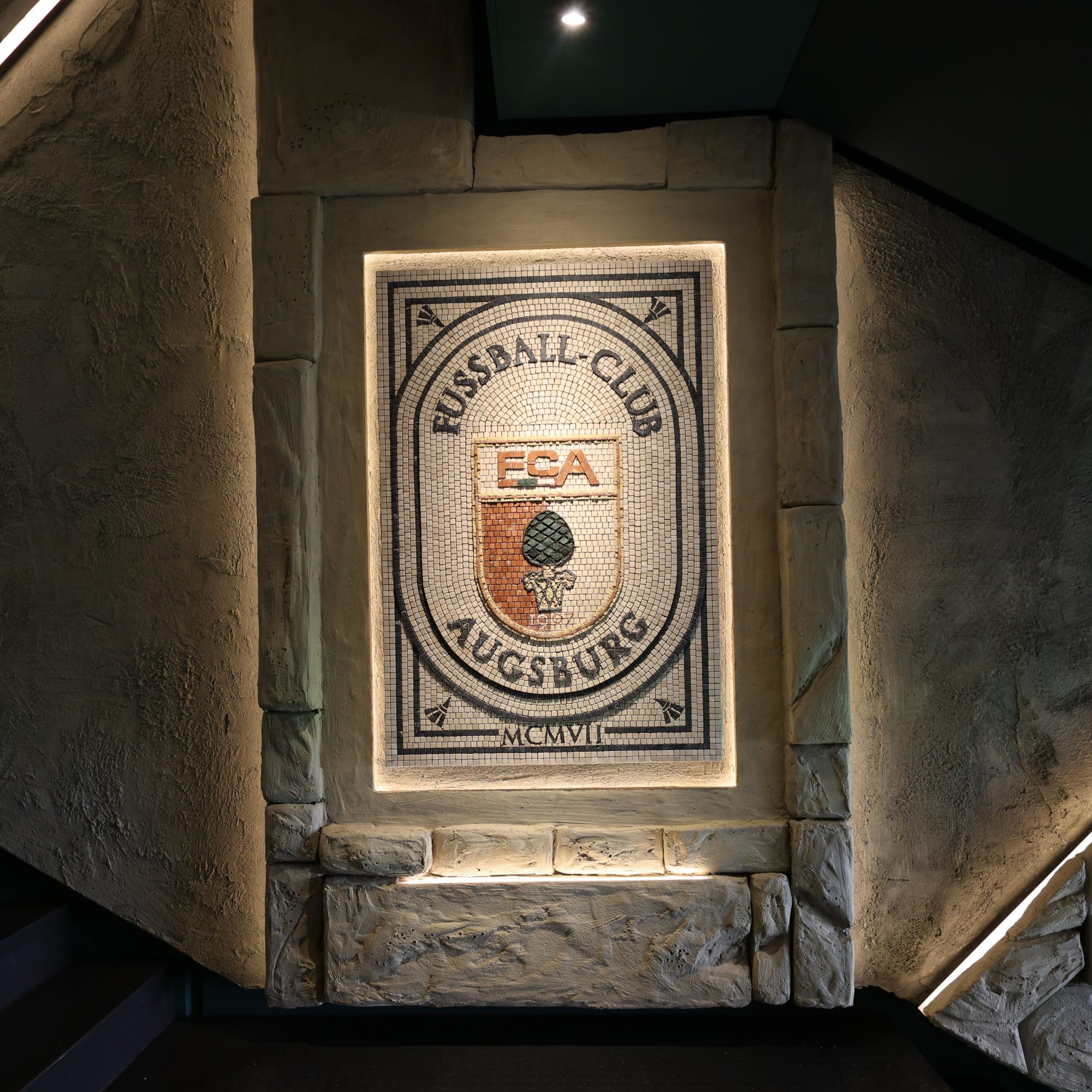
- Mosaic Inlay: At the tunnel’s midpoint, an intricate mosaic made of authentic Italian stones represents FCA’s identity.
- Illuminated FCA Badge & Motto: A large glowing crest is accompanied by bold lettering, “Kämpfen und Siegen” (“Fight and Win”).
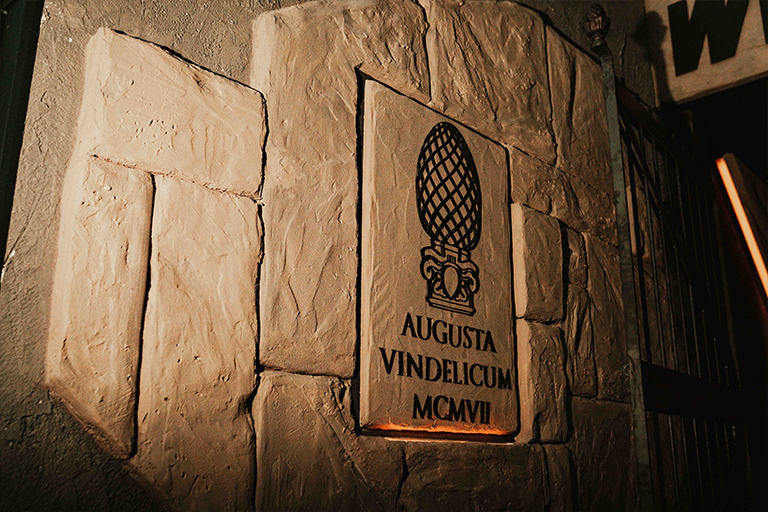
- Roman Numerals: The club’s founding year and the city’s original name, Augusta Vindelicum, are embedded in the walls—fusing the modern team with its ancient past.
The result is a gladiatorial gateway: a place where players can feel the weight of history as they march out to do battle on the pitch.
New tunnel, same Augsburg 🥶
— FC Augsburg (@FCA_World) August 28, 2025
Celebrating 10 wonderful years with our main sponsor WWK🖤💛 pic.twitter.com/jVFEJJqMSb
Roman Heritage
Augsburg’s connection to Rome runs deep.
- Founded in 15 BCE: The city began as Augusta Vindelicorum, established under Emperor Augustus after the conquest of the Vindelici, a Celtic tribe.
- Capital of Raetia: It quickly became the provincial hub of Raetia, with military, administrative, and economic importance.
- The Zirbelnuss: A pinecone motif found on Roman tombs and pillars became part of the city’s identity and still sits proudly in Augsburg’s coat of arms today.
For centuries, the Zirbelnuss and other Roman symbols have tied Augsburg to its ancient past. FC Augsburg’s decision to weave these motifs into the club’s identity keeps that story alive in a modern sporting context.
Roman Kits: Heritage Worn on the Pitch
This isn’t the first time FCA has leaned on its Roman heritage. In the 2024/25 and 2025/26 seasons, the club released special-edition Roman kits. Each design incorporated embossed motifs, Roman numerals, and the proud name Augusta Vindelicum. Both kits sold out rapidly, becoming some of the most sought-after shirts in FCA history.Together with the tunnel renovation, these tributes show a clear strategy: Augsburg’s Roman roots aren’t just a historical footnote—they’re a defining part of the club’s brand and story.

"We've long spoken about our desire to modernise our players' tunnel," said FCA CEO Michael Ströll. "Our previous tunnel was functional, but didn't really catch the eye. The results of the renovation are impressive – our new players' tunnel features a stylish, detailed design and is a perfect fit for our club. There's no doubt in our minds that we now have one of the best-looking players' tunnels in the Bundesliga."
By stepping into the past, FC Augsburg has built something thoroughly modern. The Roman-inspired tunnel is more than just decoration—it’s a symbol of identity, passion, and pride. Whether it’s through special kits, historic motifs, or this dramatic new entrance, FCA continues to bridge the centuries, ensuring that every walk onto the pitch feels like an entrance into the arena of history.